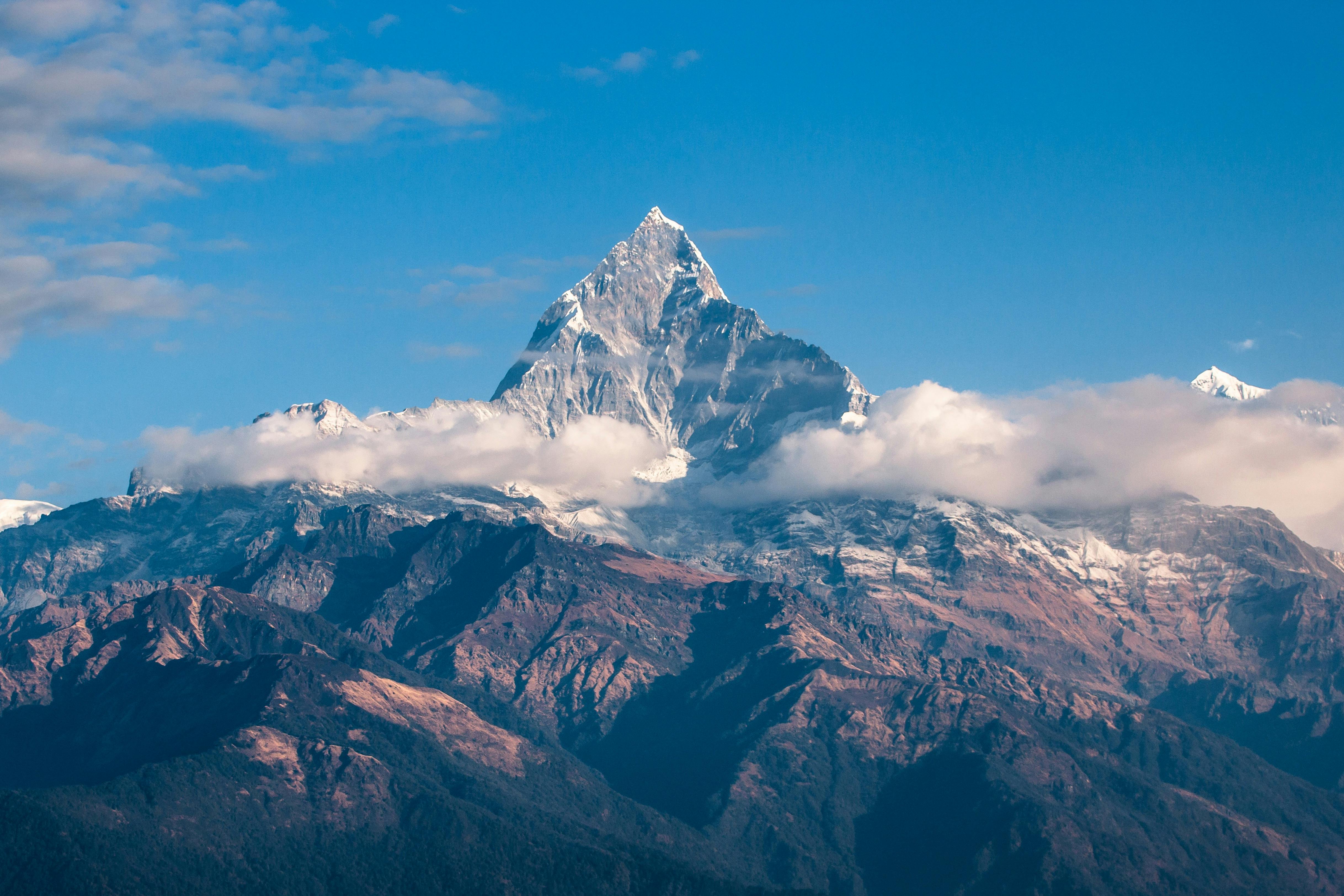
There is a word we use when certainty refuses to arrive: maybe. It is a small word, almost weightless. We place it before a plan, a prediction, or a hope, and suddenly the future opens—not widely, but enough to let possibility enter. Maybe I will go. Maybe it will work. Maybe I am wrong. Maybe there is still time. We often speak of uncertainty as though it were a weakness in reality. We want firm ground, clear answers, and promises that cannot be withdrawn. Yet much of life exists in the space between yes and no. The uncertain is not an empty place. It is where becoming happens.
The comfort of certainty
Certainty gives the mind somewhere to rest. It turns a complicated world into a manageable story. We say someone is kind or selfish, a decision is right or wrong, a future is promising or hopeless. These judgments can be useful, but they can also become walls. Once we believe we know exactly what something is, we stop meeting it as it changes. A person is never only the worst thing they have done. A failure is not always a conclusion. A quiet season may be preparing a beginning that cannot yet be seen. Certainty describes a photograph. Life is closer to a moving image.
The moral value of doubt
Doubt is often treated as an enemy of conviction. Sometimes it is. Endless hesitation can keep us from acting, and fear can disguise itself as careful thinking. But there is another kind of doubt: the doubt that makes us gentler. When we admit that our knowledge is incomplete, we become less eager to punish people with our assumptions. We leave room for context. We listen for the explanation behind the behaviour. We remember that our own motives are not always transparent to us. A little uncertainty can be a form of mercy. It does not mean abandoning judgment. It means holding judgment with enough humility to revise it when new truth appears.
The lives we do not live
Every choice creates a visible life and countless invisible ones. When we choose one city, we do not discover what would have happened in another. When we accept one invitation, we quietly refuse hundreds of possible evenings. Even small decisions divide the future into paths we enter and paths we will never see. This can feel tragic. We may wonder about the person we would have become if we had studied something else, loved someone else, or taken a risk at the right moment. But an unlived life is not necessarily a lost life. It remains part of our imagination, and imagination can teach us without becoming a place to live. The roads we did not take can still reveal what we value about the road beneath our feet.
Possibility needs limits
We sometimes imagine freedom as having every option available. Yet a life with infinite possibilities would be impossible to inhabit. To choose is to give a shape to time. A musician cannot play every song at once. A person cannot belong to every place. Attention itself is an act of exclusion: to look at one thing is to let other things fall temporarily out of view. Limits are not merely obstacles to freedom. They are the frame that allows freedom to become real. A blank page contains every story and therefore contains none. The first sentence is a restriction, but it is also the beginning of a world.
The future is not waiting for us
We often speak as if the future already exists somewhere ahead, fully formed, waiting for us to arrive. Perhaps it is less like a destination and more like a conversation. Our actions ask questions of tomorrow. The future answers through consequences, accidents, other people’s decisions, and events no one could have predicted. We do not create it alone, but neither do we merely receive it. This is why small actions matter. A message sent at the right moment, a skill practised quietly, a truth finally spoken—each one adds a new sentence to a story still being written. The future is shaped by what we repeat, but also by what we dare to attempt once.
Learning to live unfinished
There is a particular sadness in wanting to become complete. We imagine that one day we will understand ourselves, resolve every contradiction, and finally become the person we were meant to be. But perhaps a human being is not a problem waiting for a final solution. Perhaps identity is less like a statue and more like a path. It is made by movement, altered by weather, and changed by every person who walks beside us for a while. To be unfinished is not to be defective. It is to remain capable of surprise. The unknown parts of ourselves are not all threats. Some are gifts we have not yet learned how to receive.
The generosity of maybe
Maybe is not a promise. It cannot guarantee that things will improve, that love will last, or that our efforts will be rewarded. Its gift is smaller and more honest. It tells us that the present is not the whole story. Maybe the conversation can begin again. Maybe the mistake can become instruction. Maybe the version of you that feels absent is not gone, only waiting for different conditions. We should not use possibility to avoid reality. But neither should we allow reality to become an excuse for refusing possibility. Between certainty and despair there is a narrow, luminous space. It is where we act without guarantees, care without complete control, and continue without knowing exactly what continuation will make of us. That space has a name. Maybe.